MEDIA WATCHDOG — A highly alarming video circulating on social media platforms has been confirmed as a complete fabrication generated by artificial intelligence. The public is strongly urged to exercise extreme caution and verify sources before sharing sensationalist military claims online.
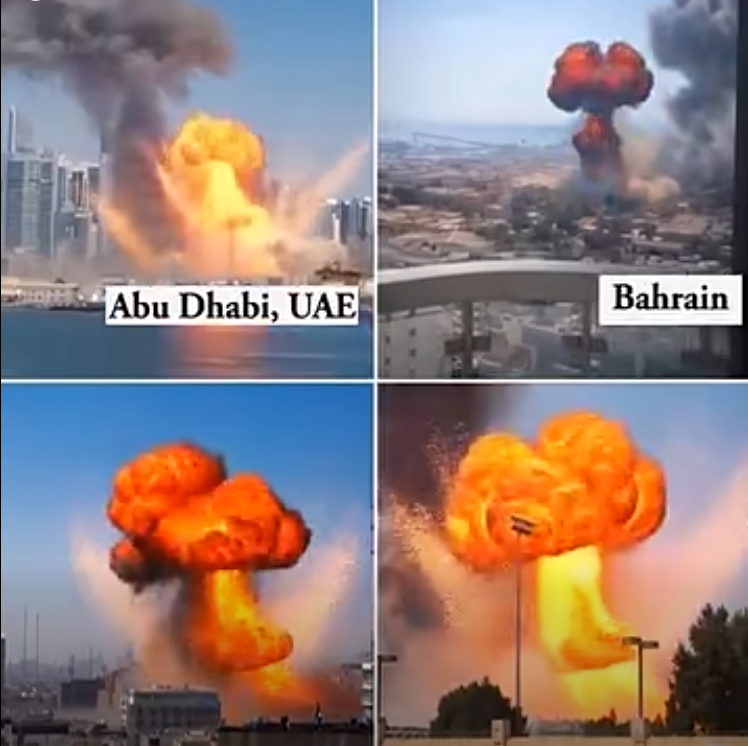
A sensational video has recently gone viral across multiple social media platforms, triggering widespread panic with a dramatic headline claiming that four major Middle Eastern nations have been simultaneously attacked. Specific labels in the video falsely identify the locations as Abu Dhabi in the UAE, Bahrain, Qatar, and Saudi Arabia. The visual content displays massive, devastating explosions with intense fireballs and towering mushroom clouds in urban areas. Due to the high-stakes nature of the claims, the video quickly accumulated thousands of shares and views within hours. However, independent geopolitical monitors and international news agencies found zero official reports supporting these claims. Security experts immediately launched a digital forensic analysis to determine the true origin of the shocking footage, and the consensus among disinformation researchers quickly confirmed that the entire video is a malicious piece of fake news. No military operations, missile strikes, or coordinated bombings have occurred in any of the mentioned sovereign states, proving that the video appears specifically engineered to spread geopolitical instability and manipulate global market sentiments through fear.
A closer look at the four-panel split screen reveals clear indicators of digital manipulation and AI generation. The top-left panel shows a massive blast near a harbor, labeled as Abu Dhabi, UAE, but forensic analysis reveals this segment heavily alters the historical footage of the tragic 2020 Beirut port explosion. Meanwhile, the top-right panel depicting Bahrain utilizes recycled footage from unrelated industrial accidents enhanced with digital flame effects. In the bottom-left corner, the panel labeled Qatar features an identical mushroom cloud structure generated by text-to-video AI tools, and the bottom-right section, supposedly showing Saudi Arabia, combines stock footage of cityscapes with superimposed explosion graphics. Furthermore, the physical rendering of the smoke and fire lacks consistent lighting behavior across all four panels. Additionally, the text overlays identifying the countries use basic fonts commonly found in cheap video editing applications. There are no authentic timestamps, news agency logos, or legitimate broadcast watermarks present on the screen, and the structural patterns of the buildings in the background do not accurately match the actual geography of the stated cities.
Official communication channels in the UAE, Bahrain, Qatar, and Saudi Arabia have maintained normal daily updates, and national defense departments have issued no red alerts, air defense activations, or emergency mobilization orders. Local citizens and residents in Abu Dhabi and Doha have posted live updates confirming the skies are completely clear. International embassies operating within the region continue their daily routines without any security changes or evacuations. Cybersecurity departments are actively working to trace the original accounts responsible for uploading the fabricated content, while tech experts warn that generative AI has reached a level where convincing war imagery can be produced in minutes. Media literacy groups are using this specific case study to educate the public on identifying deepfakes, and mainstream media networks have officially labeled the video as a psychological operation meant to cause public distress. Major internet service providers in the region have started flagging the video with “altered media” warning labels, as the lack of any real-time casualties, emergency sirens, or hospital mobilization further disproves the authenticity of the video.
The proliferation of synthetic media during periods of global tension poses a severe threat to international security. Fabricated military conflicts can inadvertently trigger automated financial trading algorithms, directly affecting global oil prices. Public anxiety can spiral out of control when citizens cannot easily distinguish between real crises and AI fabrications, which bad actors increasingly rely on to distract from legitimate journalistic reporting. The ease of access to powerful video synthesis software has significantly lowered the barrier for producing state-level propaganda. Verification teams emphasize that during a real military event, multiple independent sources will corroborate the data, making it highly dangerous to rely on a single, unverified multi-panel social media video for breaking news. Digital platforms are facing mounting pressure to implement stronger automated detection systems for violent synthetic content. The psychological impact of seeing simulated explosions in familiar cities can cause genuine trauma among viewers, and combating this wave of digital deception requires constant collaboration between governments, tech firms, and responsible journalists.
Media consumers are advised to follow a strict verification checklist when encountering breaking news videos online. Always look for official confirmations from established, reputable global news organizations before sharing sensational claims. Check the comment sections of viral videos, as independent fact-checkers often post debunking links quickly. Utilize reverse-image search tools on key video frames to locate the original, unaltered source footage. Be skeptical of accounts that post high-impact military videos without linking to credible on-the-ground journalists, and examine the audio track carefully, as fake videos often reuse generic explosion sounds across different clips. Understanding the motives behind digital disinformation helps viewers remain calm and analytical during tense times. Reporting suspected deepfakes to platform moderators helps slow down the viral spread of harmful misinformation. As artificial intelligence continues to evolve, maintaining a healthy level of skepticism toward online media is essential. Ultimately, this debunked video stands as a stark reminder that in the modern digital age, seeing is no longer believing.