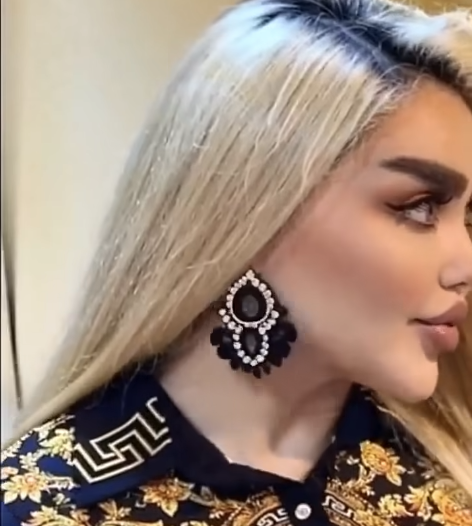
The global obsession with body modification and extreme aesthetic adjustments has reached unprecedented heights in the digital era. A compelling piece of video footage circulating across major social media platforms has recently captured the public’s undivided attention, showcasing a woman who reportedly underwent a staggering forty-three separate cosmetic adjustments to alter her appearance. The brief video clip provides an intimate, close-up look at her highly stylized facial structure from a profile perspective, emphasizing the dramatic and deliberate nature of her aesthetic changes. As she subtly shifts her head and looks downward, viewers are given an uninterrupted view of her platinum blonde hair, exaggerated facial contours, and heavily defined features. This striking real Barbie look transformation has ignited a massive wave of online fascination, prompting intense debates regarding the psychological, cultural, and physical boundaries of modern cosmetic enhancement.
The digital space has long been a breeding ground for viral physical transformations, but few examples command attention quite like someone attempting to mimic the exact proportions of an iconic plastic doll. When individuals choose to document their journey toward an idealized, almost synthetic version of beauty, the internet inevitably reacts with a mixture of awe, skepticism, and deep curiosity. The visual evidence presented in this specific footage acts as a perfect case study for how far advanced medical aesthetics can go when pushed to the absolute limit. Every frame of the short video highlights a meticulous level of facial sculpting, demonstrating that the human canvas can be completely re-engineered through repetitive clinical interventions. This jaw-dropping extreme plastic surgery viral video serves as a stark reminder of how deeply the boundary between natural human anatomy and manufactured perfection has blurred over the last decade.
Analyzing the Distinct Facial Aesthetics and Sculpted Features
To truly understand why this particular aesthetic catches the eye so effectively, one must break down the specific visual elements that define the modern human doll phenomenon. The woman in the video exhibits an array of textbook features associated with high-altitude cosmetic work, beginning with a remarkably sharp and upturned nasal structure that minimizes the natural bridge of the nose. Her lips are heavily volumized with precise dermal fillers, creating an exaggerated, pillowy pout that remains distinct even when her face is completely at rest. Furthermore, her jawline and cheekbones have been pronouncedly defined, giving her face an angular, heart-shaped structure that mimics the strict symmetry found in manufactured toys. These carefully orchestrated changes combine to create a look that deliberately steps away from conventional biological standards, choosing instead to embrace a highly curated, hyper-stylized form of artificial beauty.
Beyond the structural adjustments to her face, the woman’s styling choices play a crucial role in amplifying the overall visual narrative of her transformation. Her long, flowing locks of platinum blonde hair are perfectly straightened, draping over a highly ornate, black-and-gold patterned blouse that exudes a sense of dramatic luxury. Her eyebrows are aggressively filled and sharply arched, framing her eyes in a way that matches the bold, dark aesthetic of her prominent, teardrop-shaped chandelier earrings. The heavy, matte makeup application further flattens the natural texture of her skin, giving her a flawless, porcelain-like complexion that reinforces the inanimate aesthetic. This detailed human doll aesthetic analysis reveals that achieving such a look requires not just surgical intervention, but a dedicated lifestyle commitment to maintenance, specific grooming habits, and a highly synchronized wardrobe.
The Cultural Impact and Online Debates Surrounding Dramatic Makeovers
When photos and videos of this magnitude surface online, they instantly become lightning rods for cultural commentary and deeply polarized public opinions. On one side of the digital spectrum, a segment of the audience often applauds the individual’s dedication, autonomy, and the sheer artistry involved in executing forty-three distinct procedures without compromising health. Supporters often argue that body modification is a valid form of self-expression, viewing the dramatic results as a personal triumph of self-curation over genetic lottery. This perspective celebrates the freedom to manipulate one’s own flesh to align with an internal creative vision, no matter how extreme that vision might appear to the average observer. Consequently, the cosmetic surgery before and after debate continues to thrive, with millions of users analyzing the physical evolution of individuals who completely rewrite their genetic blueprints.
Conversely, a significant portion of the online community views these extreme makeovers through a lens of profound concern and critical skepticism. Psychologists and cultural critics frequently voice worries about the underlying societal pressures that drive individuals to seek such radical physical overhauls, citing the unrealistic beauty standards perpetuated by social media filters and digital editing apps. Critics argue that chasing an impossible, plastic ideal can lead to an endless loop of body dysmorphia, where no amount of clinical intervention is ever deemed truly sufficient. The viral nature of this blonde woman plastic surgery transformation highlights a growing collective anxiety about the future of human identity in a world where physical features can be bought, shaped, and replaced at will. Ultimately, this mesmerizing video footage does much more than showcase a single person’s unique appearance; it forces society to look directly into a mirror and question the very nature of authenticity, beauty, and self-acceptance in the modern age.