The reality of facing a sudden, large-scale emergency in a populated area is a harrowing subject that demands both emotional empathy and technical analysis. In the video provided, we are given a stark, unfiltered look into a catastrophic event unfolding in a hillside residential area. This footage serves as a powerful case study for understanding the dynamics of crowd behavior, environmental factors, and emergency response during a severe crisis. By examining the visual evidence, we can dissect the compounding elements that make urban disasters so difficult to manage and look closely at how both human elements and nature intersect in moments of extreme peril.
Understanding the progression of such events requires looking past the initial shock value and focusing on the underlying mechanics of the disaster. The video captures a scene where control has been entirely lost, and the immediate environment has turned hostile to its inhabitants. This specific footage highlights the terrifying speed at which an emergency can escalate, leaving residents and first responders with mere seconds to make life-or-death decisions. Through this analysis, we aim to uncover the critical factors visible in the scene, ranging from the geographical vulnerabilities of the location to the psychological impact on the individuals trapped within the chaos.
Dissecting the Elements of a Hillside Residential Catastrophe
The Rapid Escalation of Fire and Dense Smoke Plumes
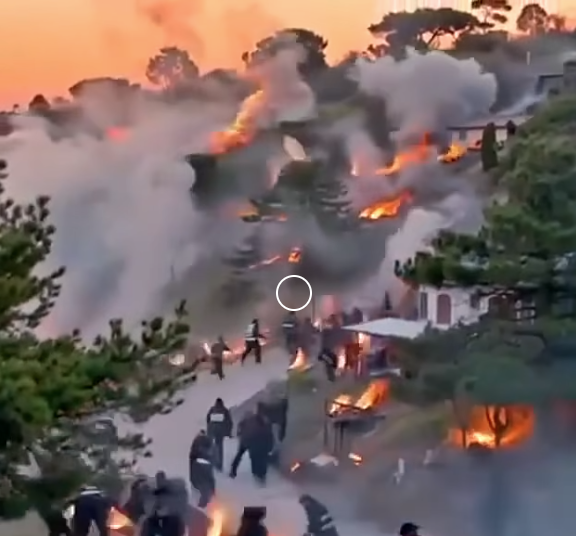
When analyzing the footage, the most prominent and immediate threat is the overwhelming presence of fire and smoke consuming the hillside neighborhood. Multiple structures and patches of vegetation are simultaneously engulfed in intense orange flames, suggesting a rapidly spreading inferno that has likely bypassed early containment efforts. The geography of a hillside acts as a natural chimney, allowing heat and fire to move upward with incredible velocity, which is clearly demonstrated by how quickly the blazes seem to leap from one property to the next. This compounding effect creates a highly unpredictable environment where safe pathways can become trapped in a matter of moments.
Beyond the visible flames, the massive, rolling clouds of thick grey and white smoke present an equally deadly hazard that dominates the entire upper half of the frame. This dense smoke plume not only severely restricts visibility for anyone attempting to navigate the area but also indicates the burning of diverse materials, likely including toxic synthetics from the residential structures. The way the smoke blankets the hillside creates a claustrophobic atmosphere, trapping heat and making respiration nearly impossible without specialized gear. This visual evidence underscores why smoke inhalation often poses a greater immediate risk to life than the actual flames during large-scale urban fires.
Human Dynamics and Crowd Behavior Under Extreme Stress
In the lower portion of the frame, the human element of this tragedy unfolds as numerous individuals are seen running and scrambling through the haze. The urban disaster analysis revealed through their movements shows a mixture of panic, urgency, and survival instinct as people try to find a way out of the descending danger. Some individuals appear to be moving with a specific destination in mind, while others seem disoriented by the thick smoke and shifting winds, highlighting the chaotic nature of uncoordinated evacuations. This behavior is typical in sudden-onset emergencies where communication lines are down and visibility is heavily compromised.
Amidst the fleeing civilian population, glimpses of individuals who appear to be first responders or community members attempting to direct traffic can be spotted. These figures face the monumental task of managing a panicked crowd while dealing with the physical hazards of falling debris and intense heat. The contrast between those fleeing for safety and those attempting to establish a semblance of order illustrates the chaotic friction that defines the first crucial minutes of an emergency response case study. Every second captured in the video represents a critical moment where human decision-making is tested against the absolute limit of environmental stress.
Structural Vulnerabilities and Environmental Compounding Factors
The Peril of High-Density Hillside Infrastructure
A critical aspect of the devastation shown in the video is the specific vulnerability of hillside residential planning when subjected to extreme conditions. The houses are built in close proximity to one another along steep inclines, meaning that a failure in one structure almost guarantees a domino effect on neighboring properties. The narrow, winding roads visible beneath the smoke are poorly suited for mass evacuations and heavily restrict the mobility of large emergency vehicles, such as fire engines. This structural bottleneck significantly delays the deployment of localized firefighting efforts, allowing the flames to expand unchecked across the terrain.
Furthermore, the integration of natural vegetation with residential housing, often referred to as the wildland-urban interface, creates a continuous fuel bed for the fire. The trees and shrubs interspersed between the homes, while aesthetically pleasing in normal times, become volatile accelerants in a disaster scenario. As the fire consumes these natural elements, it creates embers that are carried by the wind, igniting new spots ahead of the main fire front and rendering traditional containment lines useless. This intricate interplay between human architecture and volatile nature is a primary focus for modern urban planning aimed at mitigating future catastrophes.
The Psychological Impact of Visual Haze and Disorientation
The overarching atmosphere of the video is defined by a sense of profound disorientation, driven primarily by the visual haze that obscures the horizon. For the individuals on the ground, the loss of clear visual cues makes it incredibly difficult to assess where the fire is moving and which escape routes remain viable. This lack of information breeds acute panic, which can lead to stampedes or individuals inadvertently running toward danger rather than away from it. The psychological toll of being trapped in an environment where the air itself is painful to breathe and the sky is blocked by a wall of smoke cannot be overstated.
In conclusion, the video provides a sobering and deeply detailed look into the harsh realities of a complex urban crisis. It serves as a stark reminder of the importance of robust community preparedness, clear emergency communication channels, and resilient urban design that accounts for geographical risks. By studying these tragic moments through a lens of professional analysis, urban planners and emergency managers can glean vital insights necessary to protect vulnerable communities and ensure that when disaster strikes, order can be restored more swiftly and lives can be saved effectively.