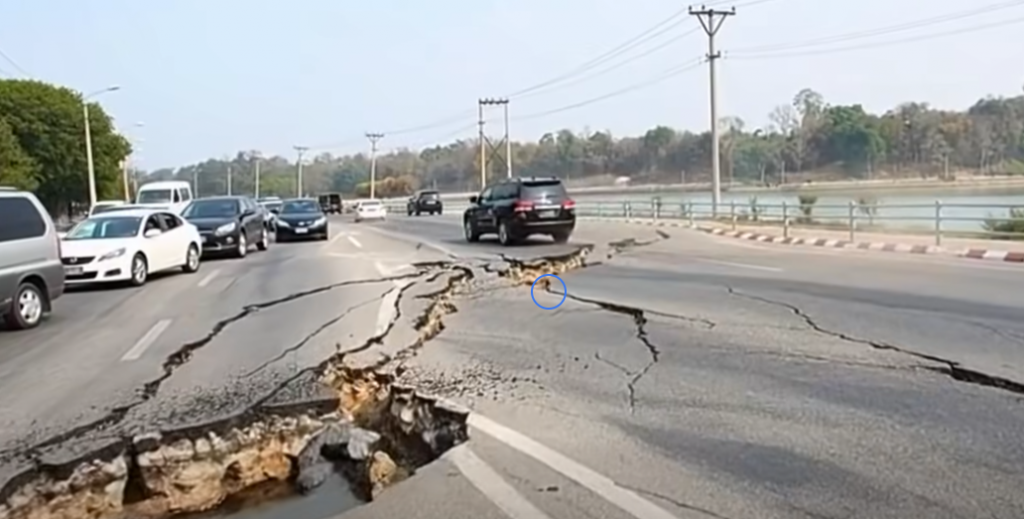
Natural disasters possess an inherent capability to dismantle human achievements within a matter of mere seconds, presenting a terrifying spectacle of nature’s absolute dominance over engineering. In the compelling video clip provided, viewers are treated to a dramatic manifestation of this reality as a major transportation artery undergoes an abrupt and catastrophic transformation. This specific natural disaster footage captures the exact moments when a heavily trafficked highway transforms into a highly hazardous zone due to powerful subterranean forces. The visual evidence underscores the immense vulnerability of modern transportation infrastructure when subjected to unexpected environmental shocks. Through a comprehensive examination of this event, we can gain a profound appreciation for the sheer power involved in geological disruptions. This analysis aims to dissect the visible phenomena, looking at both the structural degradation of the roadway and the immediate reactions of the vehicles caught in the zone.
The footage serves as a stark reminder that even the most solid concrete and asphalt structures are subject to the volatile movements of the earth beneath them. As urban centers continue to expand, understanding the exact mechanisms behind earthquake road damage becomes a critical priority for civil engineers and safety officials alike. This video offers an invaluable case study into the immediate, real-time effects of ground displacement on active roadways. By closely observing the behavior of the asphalt under stress, experts can better hypothesize the underlying geological causes that lead to such rapid destruction. The progression of the failure visible in the frame illustrates a worst-case scenario for commuters who rely on these vital corridors daily. Ultimately, analyzing these events helps society prepare for future anomalies by revealing the precise points where our infrastructure fails under pressure.
Real-Time Mechanics of a Sudden Highway Collapse
The Moment of Rupture and Structural Disintegration
The most striking element of the video is the massive longitudinal crack that violently splits the asphalt directly down the middle of the roadway. This geological fissure formation does not happen gradually but instead manifests with immediate, destructive force, tearing through layers of compacted stone and bitumen. As the camera pans across the scene, chunks of broken pavement can be seen collapsing into a deepening cavernous void below the surface. The destructive process releases clouds of dust and fine debris into the air, indicating the intense friction and crushing forces at play beneath the wheels of passing vehicles. The structural integrity of the highway completely vanishes along this fault line, exposing the vulnerable subgrade material to the elements. It is fascinating yet terrifying to observe how the solid road surface flexes and shatters like brittle glass under the influence of the moving ground. This vivid illustration of highway collapse analysis demonstrates that the primary failure begins deep underground before reflecting upward onto the visible surface. The widening gap acts as a physical barrier, instantly cutting off the normal flow of traffic and presenting an insurmountable obstacle for any vehicle unlucky enough to cross its path.
Vehicle Navigation and Driver Response Under Extreme Stress
Amidst the ongoing destruction, several vehicles are captured navigating the crumbling landscape, providing a tense narrative element to the footage. A black SUV can be seen approaching the active failure zone from the opposite direction, forcing the driver to execute a cautious maneuver around the expanding crack. Just as the heavy vehicle passes the vulnerable section, a sudden secondary collapse occurs, sending a violent plume of dust and earth upward behind it. This particular moment highlights the extreme danger faced by motorists during active seismic activity impact events where the ground can give way without warning. On the left side of the frame, a queue of stationary or slow-moving vehicles, including vans and sedans, witnesses the unfolding catastrophe from a relatively safer distance. The drivers of these vehicles appear to have halted their forward progress, recognizing that attempting to cross the fractured asphalt would result in severe vehicular damage or worse. The contrast between the moving vehicles attempting to escape the zone and the stationary onlookers emphasizes the chaotic unpredictability of sudden infrastructure failure. This real-world interaction between human transit and environmental failure provides crucial data on how emergency situations unfold on public highways.
Engineering and Geological Underpinnings of Road Subsidences
Exploring the Underground Causes of Asphalt Fracturing
To fully understand why a road would fracture so cleanly and deeply, one must examine the geotechnical factors that influence infrastructure structural failure. Roadways are designed to distribute the weight of vehicles evenly across multiple layers of sub-base, base, and asphalt surfacing. However, when the underlying ground experiences sudden lateral shifting or deep-seated erosion, the support structure disappears entirely. This lack of subterranean support creates a severe structural void, causing the heavy top layers of asphalt to collapse under their own weight. In many instances, such massive fissures are directly linked to fault line movements or the sudden settling of poorly compacted soils during environmental shifts. The clean shearing action visible in the video suggests that a significant lateral displacement occurred beneath the road, pulling the two halves of the highway apart. Geotechnical engineers look at these specific fracture patterns to determine whether the failure was caused by tectonic forces or localized subsoil washouts. Understanding these root causes is essential for developing more resilient building codes that can withstand the destructive energy of natural anomalies.
Post-Disaster Mitigation and Future Infrastructure Resilience
Once the immediate danger of an active highway collapse has passed, the long and arduous process of remediation and reconstruction must begin. The first priority for emergency response teams is to secure the area completely, halting all traffic to prevent further accidents or injuries. Detailed geological assessments are then conducted to ensure that the surrounding ground has stabilized before heavy machinery is brought in for repairs. Rebuilding a highway affected by such extreme shifting requires more than simply pouring fresh asphalt over the broken gap. Engineers must excavate the damaged subgrade, stabilize the soil with specialized materials, and sometimes implement flexible structural joints to accommodate future ground movements. This strategic approach to minimizing earthquake road damage ensures that the restored roadway will possess a much higher level of durability. The visual evidence provided by the video serves as a powerful reminder of why proactive infrastructure investment is so vital for modern societies. By studying these dramatic failures, the global engineering community can refine their models and construct safer, more adaptable transportation networks.
Broader Implications for Global Transportation Networks
The broader implications of this dramatic roadway failure extend far beyond the localized inconvenience caused to the daily commuters shown in the footage. Major highways serve as economic lifelines, facilitating the movement of goods, services, and emergency personnel across vast distances. When a critical link in this network experiences a sudden and complete failure, the resulting economic ripple effects can be felt across an entire region. This underscores the urgent need for governments worldwide to implement advanced monitoring systems capable of detecting early signs of ground displacement. Utilizing satellite imagery, ground-penetrating radar, and seismic sensors can provide early warnings that allow authorities to close vulnerable roads before a catastrophic collapse occurs. Ultimately, the powerful imagery from this video highlights the ongoing battle between human innovation and the unpredictable forces of nature, reminding us that resilience must always remain at the forefront of modern design.